About
Mark Shannon
43 years in radio. Owner and program director of Power88.FM, morning host, and — like most people at a station this size — the one who does the rack work.
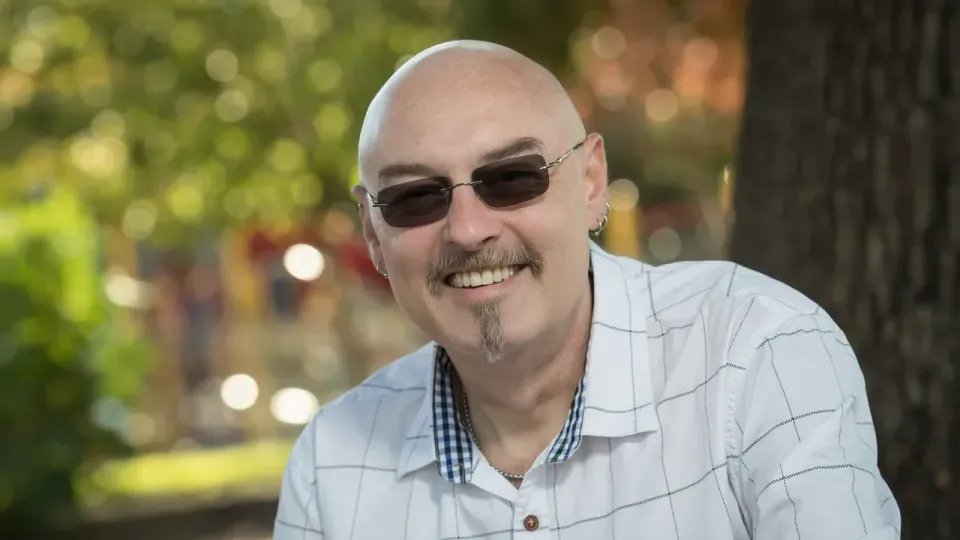
I did not come to software from the web. I came to the web from radio. I have been in this business since 1983, when I talked my way onto the midnight-to-six Saturday shift at a country combo in Pascagoula, Mississippi by telling them I was eighteen. I was twelve.
What followed was the Gulf Coast, for a long time — eleven stations across Mobile, Pensacola, Biloxi, Gulfport and points between — and most of the chairs in a station at one point or another: on air, music director, program director, station manager. Voiceover work the whole time, and still.
I was never the engineer. I just would not leave him alone. At every station I worked at the first friend I made was the engineer, and there were stretches where I spent three or four nights running out at a transmitter site chasing a fault with nobody paying me to be there. The gear carried the only thing that ever made me properly happy, and I was not going home until I understood it.
That is the same instinct that eventually wrote the software. I came off the air and moved to San Francisco — I kept a voiceover studio running the whole time, so I never actually left the business, but I was nobody's morning show for a while. In San Francisco I started making rosaries and giving them away at St. Boniface in the Tenderloin. People began asking to buy them, then asking for custom ones, and that is a shop whether you meant to open one or not — so I built the store myself. It was rough, it was not pretty, and it broke constantly. It is also the reason everything after it exists.
I started in Dreamweaver, like most people building for the web in the early 2000s. The trouble was not that it was hard; it was that it would not let me do what I actually wanted, and it hid its own work from me while refusing. So I threw it out and learned to write the code myself. No bootcamp, no degree. Just a long-standing refusal to let a box stay a mystery.
Seventeen years passed before I was on a live show again — the studio stayed busy, but a voiceover booth is not a radio station. In 2022 I went back, middays and then mornings at Kewl.fm, and a year later I left to start my own. Now I own Power88.FM, program it, host mornings on it, and fix the rack when it stops. Everything on this site was built to fix something that was wrong at my own station first, and the through-line never changed: the small-market station is not a smaller version of a big one, and it keeps getting sold tools that assume it is.
Everything above is a claim. This is the part you can check for yourself — breaks off the live morning show, which is the only thing a program director actually wants to hear.
Shannon.Show aircheck
Breaks off the live morning show on Power88.FM — talk-ups, personality breaks and the handoffs, scoped the way a PD listens.
11 stations across Alabama, Mississippi and Florida, in the order I worked them, starting in 1983. I was on the air at every one of them, somewhere in the lineup — where a title appears below, that was on top of the shift, not instead of it.
- 01 WGUD Pascagoula, MS The first one. Midnight to six, Saturdays. I was twelve.
- 02 WMML Mobile, AL Formerly WUNI — the AM country station I grew up calling.
- 03 WABB Mobile, AL WABB 97FM — Top 40, and the other station I grew up on.
- 04 WKSJ Mobile, AL The country FM the family moved to as AM was phased out. Then mine.
- 05 WJLQ Pensacola, FL
- 06 WXWY Robertsdale, AL Music Director
- 07 WQID Biloxi, MS
- 08 WVMI Biloxi, MS
- 09 WCPR Gulfport, MS
- 10 WKQR Citronelle, AL
- 11 WZBA Mobile, AL Station Manager · Program Director Owned then by a group over in D’Iberville, Mississippi.
- 2026
Founder
Station Compliance Nationwide
Built when the FCC’s program chain security rule landed and it became obvious that the stations it would hurt most were the ones with nobody on staff to read it. A $149 kit, an $895 service, and a free reference library that stays free.
- 2026
Founder
ShowPrepPro Nationwide
Daily show prep, sourced twice and readable on the air. Built by somebody who had spent years opening the incumbent’s Word document at 5am and wishing it were anything else.
- 2026 — present
Voice of the Fair
Solano County Fair Association Vallejo, CA
The official title. And roughly how it is supposed to work in a market this size — the fairgrounds, the station and the morning show are all inside the same twenty miles.
- 2025 — present
Founder and developer
Cartwright Nationwide
Started because Power88’s own traffic software had never once delivered a log the automation could import, and the fix turned out to be eight separate faults across two systems. It runs Power88 every day now, and it is being readied to run somebody else’s station — which is a different and much harder thing.
- 2023 — present
Owner and Morning Show Host
Power88.FM Solano County / I-80 corridor, CA
And this time it is my building.
Launched in Fairfield in 2023 to prove that a digital station could still be a local one. Greatest hits of the ’70s, ’80s and ’90s, streaming-only, with a mobile rig that spends the summer at fairs and car shows.
Owner, program director, morning host, and the person who fixes the rack when it stops. A station this size does not have departments — it has whoever is standing there.
- 2022
Midday, then Mornings
Kewl.fm
Seventeen years off the air — never out of the business — and then back behind a live microphone.
Middays first, then the morning show. I left to launch Power88.FM.
- 2013 — 2025
Global Vendor Manager
Minted.com San Francisco, CA
Twelve years working with vendors twelve time zones away, which teaches you one thing better than any other job could: what it feels like to need a single straight answer out of somebody and be unable to get one.
That is the whole reason there is no support form on any site I run.
But the part that actually changed how I do business had nothing to do with vendors. Minted was the first company I ever worked for that took care of its people — a decent, fair wage, real benefits, and the plain experience of being valued rather than merely retained. After the previous eight years, that landed harder than it probably should have.
I had assumed, without ever quite putting it into words, that being worth more than you are paid is just the shape of working. It is not. Somebody had simply chosen otherwise, and somebody else could choose differently.
So that is the thing I set out to reproduce in everything I run. Employee, contractor or client — everybody should be treated fairly and know they are valued. It is why the domains get bought at cost with no markup, why the price is on the page instead of behind a quote form, and why a real person answers the email. None of that is a marketing position. It is just the difference between the two jobs I had in San Francisco, and I know exactly which side of it I want to be on.
- 2005 — 2013
Seasonal hire, then General Manager — multiple stores
The UPS Store San Francisco, CA
I was brought on for the season. They kept me because, as the owners put it, I treated the place like it belonged to me — which is not a technique. It is the only way I know how to work.
Assistant manager within months. Store manager inside a year.
The year after that the franchise owners took over a failing location, the same shape as the one they had just watched me turn around, and sent me over to find out whether I could do it twice. I did. Revenue up forty-three percent — which happened to be the identical number the first store had put up, and I have never decided whether that is a coincidence or a joke.
So they sent me to another one. Same result. Then another.
The whole time — turning stores around, then overseeing several of them across San Francisco — I was paid thirty-six thousand dollars a year, with no benefits. That is an embarrassing number to publish. It is also true, and I did the work anyway, because at that point proving I could do it mattered to me more than what it paid.
Stand behind eight retail counters for seven years and you learn precisely what it costs a business to have no real customer service: it costs you the customer, and then they tell people. You also learn the other lesson, the one about what it costs a person to be worth more than they are being paid and to find out that nobody is going to mention it.
The code was written nights and weekends. This was the daytime.
- 2005 — present
Voiceover — own studio
Commercial, imaging, narration Remote
The thread that never broke. Through the San Francisco years, the retail counters and the twelve years of vendor management, the booth stayed set up and the work kept coming.
The other half of staying current was people. I kept the friendships — in radio and on the music side — which is how you hear that a format flipped, or who is programming where now, or what actually happened at a station rather than what the trade press said happened. That is not networking. It is just not losing touch with the only business I ever wanted to be in.
Which is why the gap between 2005 and 2022 is a gap in air shifts and not a gap in the business — and why the count on this page starts at 1983 and has never stopped.
- 2005
Founder — and the first website I ever built
Rose Marie's Rosaries · rosemariesrosaries.com San Francisco, CA
I had come off the air and moved to San Francisco — I kept a voiceover studio and kept working, but I was not on anybody’s morning show — and I started making rosaries. I gave them away at St. Boniface, in the Tenderloin.
Then people started asking to buy them, and then they started asking for custom ones, and that is a shop whether you meant to open one or not. So I built the site myself — an e-commerce store, for me, by me.
There is no Rose Marie. I made her up because she sounded good rolling off the tongue, which is not a design process so much as twenty years of naming things for a living leaking into the day job.
It was rough. It was not very pretty. It broke all the time. It is long gone now, and it is still the most useful thing I ever built, because everything after it is downstream of what breaking it taught me.
I started in Dreamweaver, like most people building for the web in the early 2000s did. The problem was not that Dreamweaver was hard — it was that it would not let me do the thing I actually wanted, and it hid its own work from me while refusing. I could not customise it and I could not see inside it, which are the same complaint twice.
So I threw it out and learned to write the code myself. Then how to build software. I have been doing it ever since.
Which is the transmitter all over again, twenty years later: I do not trust a box that will not tell me what is inside it, and I cannot leave one alone until I know. No bootcamp, no degree — just a long-standing refusal to let something stay a mystery.
- 1983 — 2005
Air talent · Music Director · Program Director · Station Manager
Eleven stations Mobile · Pensacola · Biloxi · Gulfport · Pascagoula · Robertsdale · Citronelle
Eleven stations across the Gulf Coast, in four states’ worth of small and mid-sized markets. I moved around the way disc jockeys do, which is to say constantly, and I picked up most of the chairs along the way — music director, program director, station manager.
I was on the air at every one of them. The titles came on top of a shift, never instead of one. Voiceover work the whole time as well, and still.
The full run is below.
Three of them I grew up listening to, and later worked at. WUNI was the family’s station, country on AM, on in the house when I was small — and when AM started being phased out we followed the format to WKSJ on FM. Then, in middle and high school, I got my own: Top 40, G100 on WKRG and WABB 97FM.
WUNI became WMML and hired me. WABB hired me. WKSJ hired me. Three of the four stations that raised me eventually put me behind their own microphone, which is a strange thing to be able to write down.
The fourth one is WKRG, and I got about as close as a person can get without it counting. By the time I reached WKSJ, Clear Channel had bought most of the stations in the city and merged them into a single building: 555 Broadcast Drive, the same address WKRG was broadcasting from when I was a teenager listening to it. So every working day I walked past its window on the way to my own studio.
Close enough to see in. Never once on the air there. I have made a kind of peace with it.
I was never the engineer and never had the ticket. But at every station I ever worked at, the first friend I made was the engineer, and I suspect a few of them wished I had not. There were stretches where I spent three and four nights running out at a transmitter site chasing a fault with nobody paying me to be there. Every one of those men explained it, patiently, at two in the morning, to a disc jockey who had no business being out there — and not one of them made me feel stupid for not knowing yet.
That is the entire reason I will not do it to you.
- Late 1980s
Air talent
WMML 1410 (formerly WUNI) Mobile, AL
The station I grew up on. WUNI — “you and I”, everybody said it Woonie — was what my mother had on in the house, and it had a mascot called the Wuni Bird you could telephone and talk to. It was some poor guy down the hall doing a voice. I was a kid, and as far as I was concerned there was a bird at the radio station and he would take my call. About once a week, for years.
Mel Tillis bought the place in 1984 and changed the call letters to WMML, after his own stutter. A few years after that, they hired me.
Same frequency, same building. I sat behind the microphone I had been ringing up as a small boy and played the same records I grew up hearing come out of it. Nobody gets over that.
Which is why, when somebody hands me their station, I know exactly what I have got hold of. I have been on the other end of it — once a week, on the phone, talking to a bird.
- 1983
Air talent — the first job
WGUD AM/FM Pascagoula / Moss Point, MS
Country, AM and FM combo. Midnight to six in the morning, one shift a week, Saturday night into Sunday morning.
I was twelve. I told them I was eighteen, nobody checked anything back then, and I was not going to be the one to bring it up.
Understand what that shift is, though. Midnight to six on a Saturday is the worst air shift in any building — it is what you hand the person with no leverage. Nobody sweet-talks their way into it. You take it because you cannot stay away from the place.
Before that it was a bedroom, my mother’s Radio Shack microphone and a tape recorder, talking over records to an audience of nobody. Some kids want to be firemen.
The overlaps are real, not sloppy. The station launched while the day job was still running, and the first website was built behind a retail counter.
-
On air
Mornings, imaging, live remotes, event hosting and voice work. 43 years of reps — hear a break.
-
Programming
Clocks, format, rotations, a music library that has actually been graded, and prep that holds up.
-
The back room
Traffic and billing, automation, log delivery, FCC compliance, and the wiring behind all three.
-
Software
Built for stations, by somebody who has to use it at 4pm on a Friday like everybody else.